

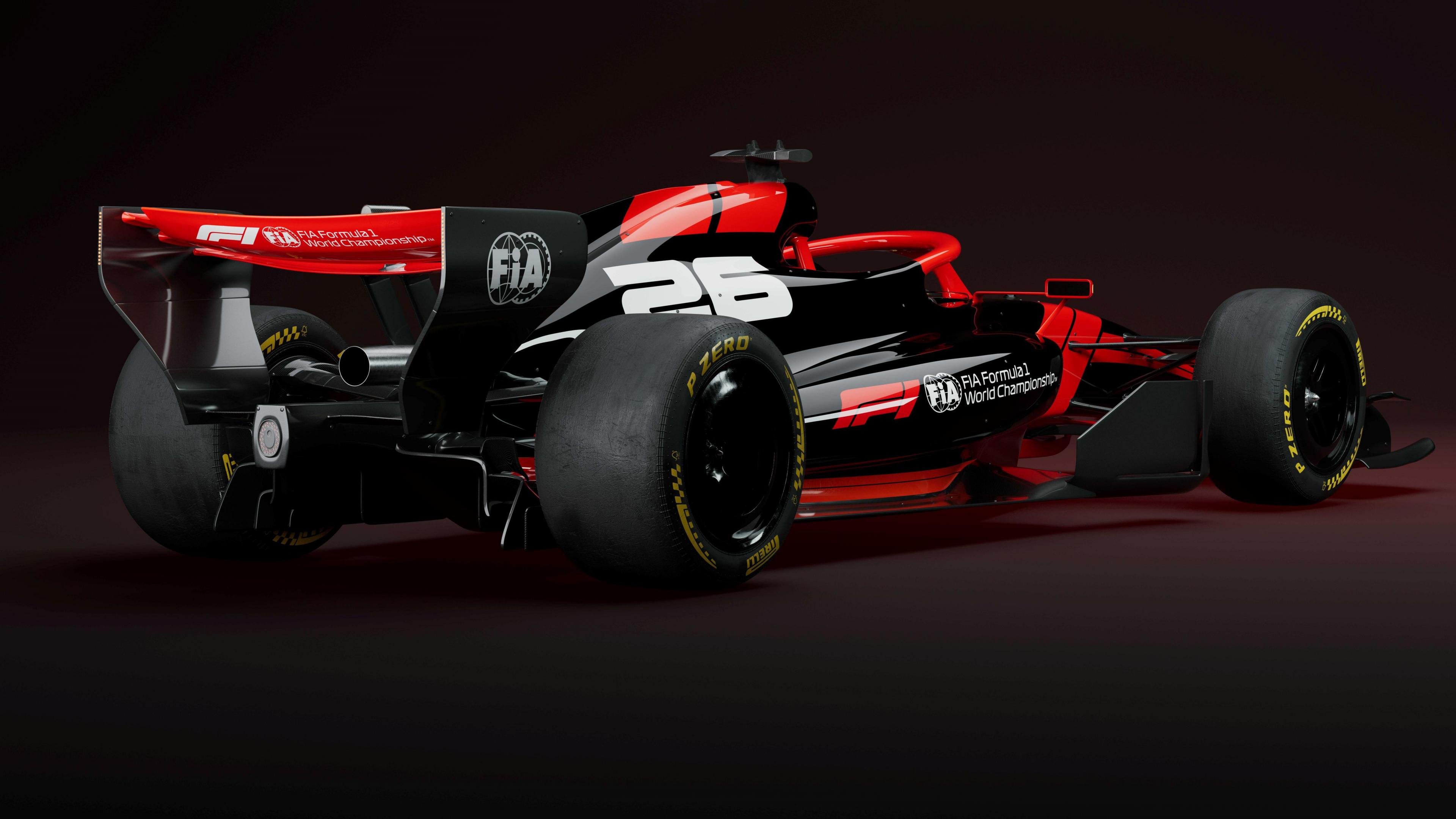
The 2026 Formula 1 cars are designed to be smaller, nimbler and more environmentally friendly than this year.
Formula 1 has revealed the new language that will be used to reference the advanced features of its upcoming 2026 regulations.
The racing series is embarking on what is potentially the biggest technical shift in its competitive history next season, featuring revised car and engine specifications and the compulsory introduction of 100% sustainable fuels.
The updated 1.6-litre V6 turbo hybrids, which retain the 1.6-litre V6 configuration, boast a substantially higher electrical capacity, driving major innovations in the vehicles' aerodynamic design.
Throughout races, pilots will tactically deploy battery power – potentially on flying laps – to extract the optimal performance.
Wide-ranging research were undertaken with a mix of viewers, including dedicated enthusiasts and casual observers, to identify which phrases would aid comprehension of the key features of the upcoming rules.
The stated goal was to render a set of intricate new areas of the racing as straightforward as possible for the global fanbase.
Consequently, initial designations for some systems – such as "modes labelled X and Z" for the moveable wings – have been phased out in favor of straightforward terms that succinctly convey the actual function of the system.
What's the New Technology?
The FIA states that drivers will have greater control to choose strategies regarding battery management, harvesting, and saving energy.
The upcoming changes mandate a series of modes that will be clearly indicated on TV overlays to enhance the fans' insight of the race battle.
- Passing Mode: This takes over from the current DRS. It provides a surge of additional ERS power available when a competitor is less than a second the vehicle in front to facilitate an overtaking maneuver.
- Boost Mode: This is a on-demand power boost from the hybrid system that can be used in attack or defence. It provides the driver peak output at the click of a switch.
Both of these key functions will have to be managed carefully, as the total energy is restricted.
- Active Aerodynamics: Both the front and rear wings change configuration – opening on the long straight sections for minimal air resistance and top speed, and angling down in the turns for optimal cornering performance.
- Battery Recharge: The system can recharge the energy store with energy harvested under braking, or during partial power application at the end of straights or in corners where only partial power is required.
What's Changing on the Cars?
The next-generation machines will be smaller and lighter compared to the 2025 spec, with a car length shortened by 200mm to 3,400mm, car width cut by 100mm – down to 1,900mm – and the lowest permissible weight lowered by 30kg.
Overall downforce is anticipated to be reduced by approximately 15-30%, although squads will naturally regain performance as they optimize their packages.
Aerodynamic drag has been reduced by 40%. The cars will utilize adjustable aero systems – front and rear wings will move on the straights to cut resistance and enhance velocity and revert into place for optimal grip in corners.
Wheels will retain 18-inch wheel rims, but the rubber compounds will be slimmer, by 25 millimetres on the front axle and 30 millimetres on the rear axle.
Power Unit Revolution
The revised hybrid units will have an roughly half-and-half distribution in horsepower generated by the internal combustion engine and the electrical system, a rise from about one-fifth electric power this year.
The energy recovery system is simplified through the elimination of the MGU-H, the complicated and costly device that recovered energy from the exhaust turbo.
All vehicles will be obliged to compete on fully sustainable fuel, manufactured from plant-based materials or lab-created processes.


